St. Lucie County
Silent SpringSt. Lucie County is the Florida setting for a 1955 salt-marsh treatment whose intended target was sandfly larvae but whose immediate ecological consequences extended across the marshes. The episode makes the county significant not as a backdrop but as a place where pesticide use was followed by a documented, large-scale loss of aquatic life.
Setting and Treatment
In the spring of 1955, about 2,000 acres of salt marsh in St. Lucie County were treated with dieldrin in an effort to eliminate sandfly larvae. The application used one pound of active ingredient per acre. In Rachel Carson’s account, the treatment is presented as a striking demonstration of pesticide effects on salt marshes, estuaries, and quiet coastal inlets.
Reported Ecological Effects
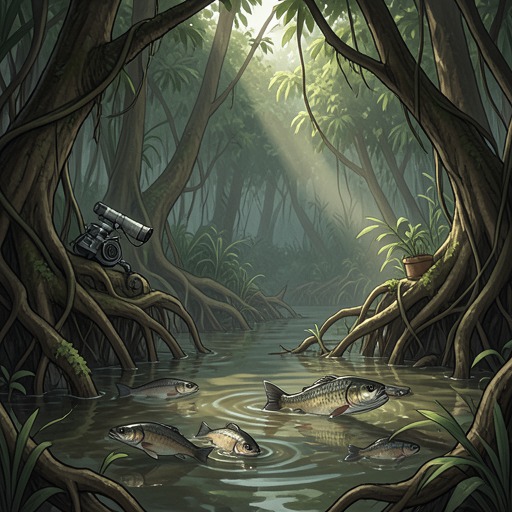
Scientists from the Entomology Research Center of the State Board of Health surveyed the aftermath. Their report described a substantial fish kill; the account gives a minimum immediate total of 20 to 30 tons, or approximately 1,175,000 fish, representing at least 30 species. The reported losses included mullets, snook, mojarras, and gambusia, and no species was spared.
The effects differed among groups of aquatic life. Mollusks appeared unharmed by dieldrin, while crustaceans were virtually exterminated throughout the area. This contrast records both the breadth of the disturbance and its uneven impact across organisms.
Significance in Carson’s Account
The case links a targeted control measure to consequences beyond the pest it was meant to suppress: a treatment aimed at sandfly larvae was followed by extensive mortality among fish and crustaceans. Its force in Carson’s argument rests on the specific place, acreage, application rate, and survey totals, which turn the general risk of pesticide use in coastal waters into a documented local event.